-
+86-551-62240026
- leonnn410@gmail.com

+86-551-62240026
2026-09-10
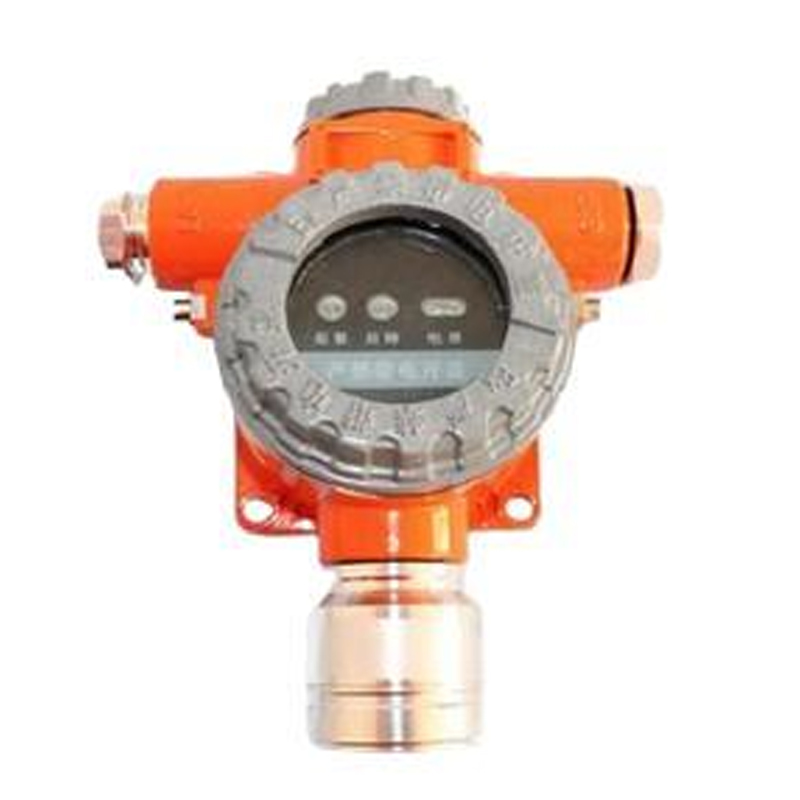
The gas sensor is a key component of the gas analyzer; it converts changes in gas concentration into a corresponding electrical signal. Common gas sensors include catalytic combustion sensors, semiconductor sensors, infrared sensors, photoionization sensors, and electrochemical sensors. The operating principles of the various types are presented separately below.

Standard model

Model with light signaling

LCD model

LCD display + light alarm
1.Catalytic combustion sensor
The catalytic combustion sensor is currently the most common low-cost combustible gas sensor. Inside it are a pair of small “balls” made from a platinum wire spiral coated with a ceramic base. One of them is a sensitive “ball”, which is a detecting element; its surface is covered with a layer of catalyst that reacts with all flammable gases present. The other is an inert “ball” that does not react with any gas and serves only as a compensating element for changes in external temperature or humidity.
During normal operation, the platinum wire helix is heated by electric current to a high temperature of 450°C–500°C. Upon contact with a flammable gas, a catalytic combustion reaction occurs on the surface of the detecting element, the temperature rises, and the resistance of the platinum wire inside increases accordingly. Using a Wheatstone bridge, the change in resistance of the detecting element can be accurately measured and thus the concentration of the detected gas can be calculated.
2.Semiconductor gas sensor
A semiconductor gas sensor is often used to detect flammable and toxic gases in low concentrations. Its gas-sensing element is a metal oxide film deposited on a silicon wafer. When the detected gas comes into contact with a metal oxide, the gas is adsorbed on its surface, causing a change in the resistance of the metal oxide, and this change in resistance is associated with a change in gas concentration. Typically, the surface of the semiconductor sensor is heated to a constant temperature in the range of 200°C to 250°C to increase the response rate and reduce the effect of changes in ambient temperature.
3.Infrared gas sensor
Infrared gas sensor is mainly used to detect flammable gases and carbon dioxide. Compared with catalytic combustion sensor, it has the advantages of better stability, high accuracy, high noise immunity, no poisoning, suitable for harsh operating conditions, low maintenance and long service life. It is generally considered as a high-end product for detecting flammable gases. Due to the price factor, its use is not as widespread as the catalytic combustion sensor, however, with the continuous progress and improvement of infrared sensor production technologies, the price difference between them is narrowing. The current trend is to gradually replace catalytic combustion sensors with infrared gas sensors and rapidly modernize products. Common infrared gas sensors come in two types: point and open optical channel.
The point infrared gas sensor consists of an infrared source, an optical focusing lens, a gas sampling cell and a pyroelectric sensor. When infrared light emitted by an infrared source passes through a gas sampling cell, infrared rays of a certain wavelength are absorbed by the detection gas in the cell. By comparing the intensity of the absorbed infrared light with the intensity of the reference infrared light, the concentration of the detected gas can be obtained.
The open optical channel infrared gas sensor consists of transmitting and receiving modules and must be installed in pairs. The transmitting module sends an infrared beam to the receiving module. In the presence of the detected gas, infrared rays of a certain wavelength in the light beam are absorbed by the gas. By comparing the intensity of the absorbed infrared light at the receiving module with the intensity of the reference infrared light, the concentration of the detected gas can be determined. The unit of measurement of an open optical path infrared gas detector is LEL m, which is the total gas concentration in the optical path multiplied by the distance.
4.Gas photoionization sensor
The photoionization gas sensor is capable of detecting concentrations of volatile organic compounds and other toxic gases at extremely low levels (parts per million and even parts per billion concentrations). The photoionization gas sensor uses the principle of gas ionization by light to detect gases. It uses an ultraviolet light source to break down organic matter into positive and negative ions that are detected by the device. The detector registers the charge of the ionized gas and converts it into a current signal. After amplification and processing of the current, the gas concentration value in parts per million is displayed. After detection, the ions are reduced back into the original gas or vapor. The photoionization sensor is a non-destructive sensor, it does not “burn” or change the detected gas for a long time, so the gas after detection by the photoionization sensor can be collected for further measurements.
5.Electrochemical gas sensor
Electrochemical gas sensor occupies an indispensable place in the detection of toxic and harmful gases. An electrochemical gas sensor consists of an electrolyte, electrodes and a filter. By selecting the appropriate voltage, electrolyte and electrode materials, the detected gas reacts chemically on the electrode surface and generates a microcurrent whose magnitude is proportional to the gas concentration. By analyzing and processing this current, the concentration of the detected gas can be obtained.