-
+86-551-62240026
- leonnn410@gmail.com

+86-551-62240026
2026-08-29
— Remote gas monitoring and alarm system with visualization based on Fourier transform infrared spectroscopy, an independent and controllable powerful atmospheric monitoring tool
When polluting gases spread unnoticed, who can instantly recognize them from a distance of several kilometers? When hazardous chemicals leak, who can sound the alarm within 2 seconds? When technologies have been monopolized for a long time, who will be able to raise the banner of independent import substitution?
The answer is Anhui Lijian Defense Science and Technology Co., Ltd.'s independently developed remote gas monitoring and alarm system with imaging based on Fourier transform infrared spectroscopy.

Capacity building for the prevention and control of ambient air pollution is continuously advancing, and infrared spectral telemetry technology is entering an important period of large-scale application. In Hefei City, Anhui Province, the national high-tech enterprise, which has carried out in-depth research and development for many years, with the solid technical strength of “complete independence and controllability”, enters the key fields of environmental monitoring, emergency response and chemical safety, becoming an important scientific and technological force in guarding the frontier of clear skies.

1. Political tailwind opens up new opportunities for infrared spectral telemetry technology
“Guidelines for Capacity Building for the Prevention and Control of Atmospheric Air Pollution during the Fifteenth Five-Year Plan Period” indicates that at present, the prevention and control of atmospheric air pollution is moving from “back-end purification” to comprehensive modernization towards “precise source identification and intelligent supervision.” The infrared spectral telemeter, due to its unique advantages - remoteness, non-contact and fast recognition - creates an urgent technical need in several areas of application:
mobile monitoring vehicles need equipment that can “sense the smell of gases,” unmanned aerial vehicles need sensor systems that can “see toxic substances,” high-altitude surveillance requires infrared monitoring similar to the “all-seeing eye,” chemical industrial parks need automatic monitoring stations that operate “without sleep or rest.” These real needs open a wide policy window for large-scale application of infrared spectral telemetry technology.
2. National breakthrough: the solid technical power of passive Fourier transform infrared spectroscopy
Anhui Lijian Defense Science and Technology Co., Ltd. was established in 2018 with the investment support of science and technology funds of the provincial, city and district governments of Anhui Province. The headquarters is located in the Hi-Tech Zone of Hefei City. The company is a national high-tech enterprise, an SME of Anhui Province "specialized, precise, special, innovative", specializing in the research, development and production of high-performance optical-mechanical-electronic products.
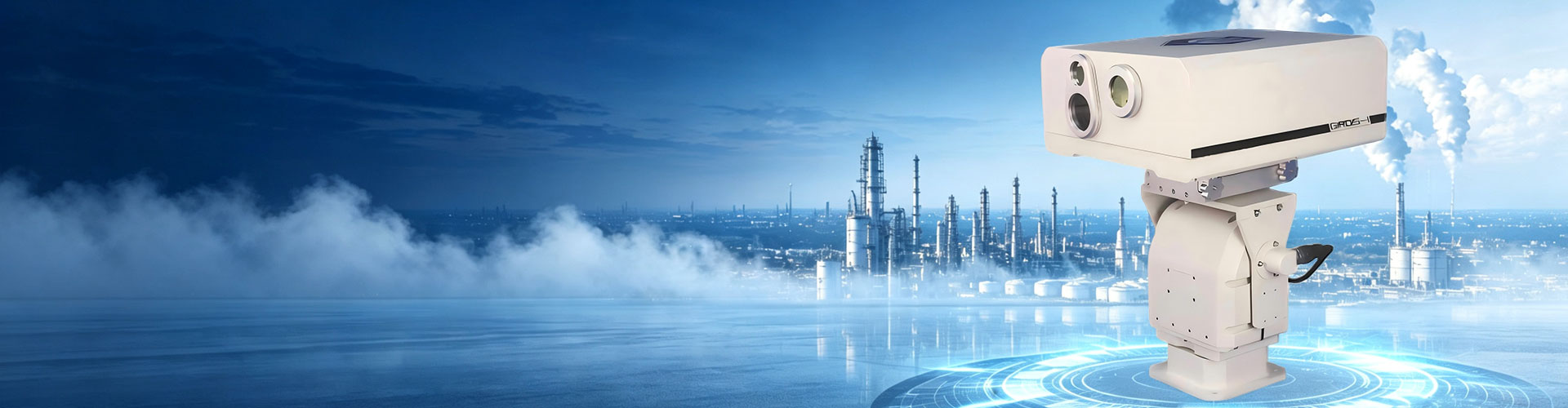
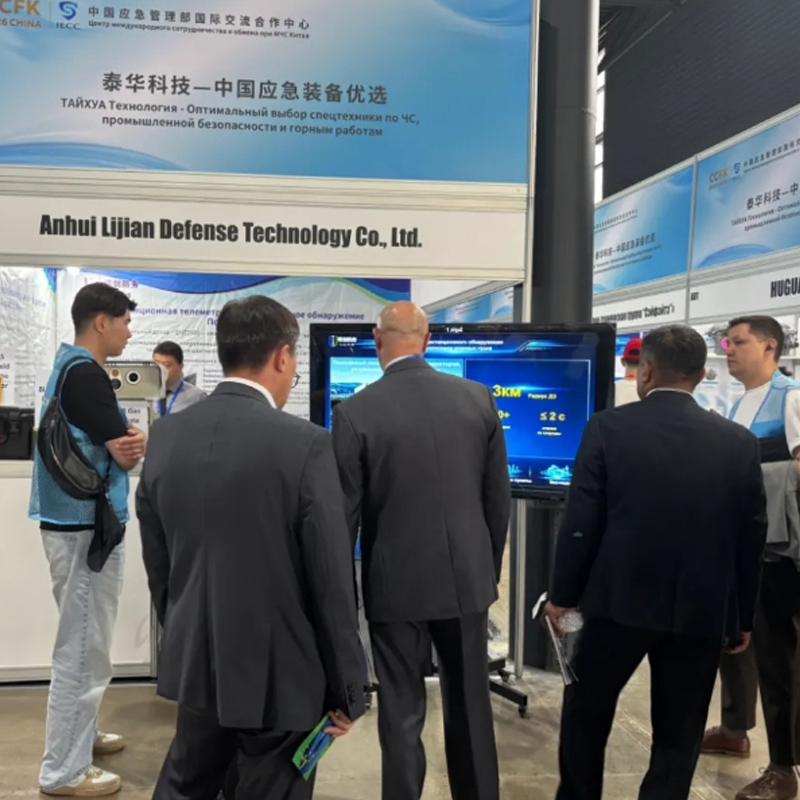
The company's key product - a remote gas monitoring and alarm system with visualization based on Fourier transform infrared spectroscopy - is precisely a powerful atmospheric monitoring tool created on the basis of passive infrared spectral analysis technology with Fourier transform.

2.1 Basic technical principle
The system takes advantage of the property of various gas molecules to have unique “fingerprints” of absorption spectra in the infrared range. By passively receiving infrared radiation from the target area, without any active light source or laser irradiation, it is able to remotely recognize gas species and restore their concentration.
The subtlety of this “passive” design is that the equipment itself does not radiate energy to the outside, which eliminates the possibility of danger in a flammable and explosive environment, and also gives the system exceptional stealth and safety. It is like an invisible sentry who silently serves, leaving no traces.


2.2 Key performance indicators
| Indicator | Meaning |
| Maximum detection radius | 5 km |
| Quantity of gases detected | more than 500 types (chemical warfare agents, volatile organic compounds, inorganic substances, etc.) |
| Simultaneous Detection Capability | more than 30 types of mixed gases |
| Alarm time | within 2 seconds |
| Spectral range | 2 µm ~ 16.7 µm (600 cm⁻¹ ~ 5000 cm⁻¹) |
| Spectral resolution | 1/4/8 cm⁻¹, adjustable |
| Image formation method | visible light + infrared thermal imaging + pseudo-color alarm overlay |
| Cooling method | Aircraft grade Stirling cooling |
| Degree of protection | IP66 |
| Deployment method | portable, stationary, automobile, onboard, ship |
2.3 Seven key benefits
1.Non-contact telemetry: visible - measurable. Personnel and equipment are not required to enter the danger zone; beyond the safe distance, everything is under control.
2.Large area remote coverage: one device covers a 5km radius area, 24/7 automatic scanning and 24 hours monitoring, which is equivalent to creating an invisible security network over an area of about 78 square kilometers.
3. Round-the-clock detection with imaging: triple information fusion - visible light + infrared thermal imaging + spectral imaging, day and night, in wind, frost, rain and snow, continuous all-weather operation.
4.Response in seconds: no auxiliary materials or preparation time required, quick recognition and response within 2 seconds, result immediately after measurement. In the face of danger, every second is vital.
5.Simultaneous detection of multiple components: Able to detect more than 30 kinds of mixed gases at the same time, no need to stop to replace components, one device - multiple functions, efficiency is doubled.
6.Customizable gas database: at the customer's request, the types of recognized gases are customized and expanded, flexible adaptation to scenarios of various industries.
7.Dynamic source identification: real-time display of gas distribution and propagation trend, the source of leakage cannot hide, aid in fast locating and accurate response.
In serial production, the system installed on an unmanned aerial vehicle especially stands out.

3.Aerial powerful tool: system installed on an unmanned aerial vehicle, GIRDIS-1
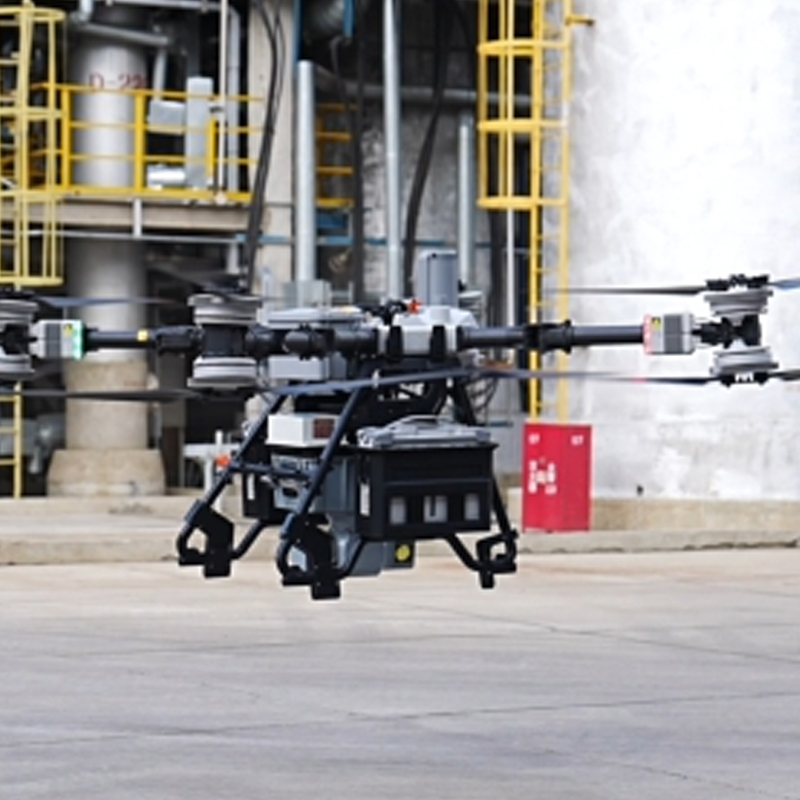
In the Lijian family of products, one model attracts particular attention - the remote monitoring and alarm system with visualization based on infrared spectroscopy installed on an unmanned aerial vehicle (model GIRDIS-1). This is the first passive infrared spectral remote monitoring and warning device with gas imaging installed on an unmanned aerial vehicle for aerial inspection, completely independently developed.
The advent of GIRDIS-1 opened up a completely new application mode - the use of an unmanned aerial vehicle as a platform for non-contact large-scale volumetric monitoring of hazardous chemical gases.
Imagine: an unmanned aerial vehicle flies over a chemical industrial park, and within a radius of several kilometers, toxic and harmful gases, industrial emissions, chemical toxic substances are completely visible - automatic qualitative and quantitative analysis, immediate notification. The system supports two monitoring modes: hovering and en-route flight, the whole process is visualized, gas distribution and propagation trend are visible at a glance, data is automatically saved, transmitted back and supports remote distribution.


From the ground to the sky, Lijian takes the gas monitoring overview from the plane to the volume.
4.Five major application scenarios: from chemical industrial parks to the front line of emergency situations
4.1 On-site inspections of provincial and city-level environmental enforcement
The portable system allows law enforcement officers to quickly perform qualitative identification and semi-quantitative analysis of gas composition without approaching dangerous emission vents at a safe distance. A response speed of within 2 seconds effectively supports rapid decision-making during on-site law enforcement, data is locally stored and uploaded to the network, which meets the requirements of computerized management.

Law enforcement becomes more confident, the evidence becomes stronger.
4.2 24-hour automatic monitoring of chemical industrial parks
The stationary system is installed at high points of the park, one installation covers a radius of 5 km. Currently, the system has actually been deployed and applied in chemical industrial park scenarios in more than 20 provinces of the country, and significant results have been achieved.
Day and night, in severe cold and extreme heat, she invariably remains on duty, becoming an indispensable “electronic sentry” for chemical safety.

4.3 Mobile inspection using vehicle monitoring
The vehicle system uses passive telemetry technology, does not require air intake, and performs telemetry imaging of pollutant gases in real time while driving. A single visit allows for multi-factor screening, significantly increasing inspection efficiency.

The car drives along the path - the data follows the path, the pollution has nowhere to hide.
4.4 High-altitude volumetric monitoring using an unmanned aerial vehicle
The GIRDIS-1 system, installed on an unmanned aerial vehicle, is able to overcome the limitations of terrain and building shading, realizing volumetric monitoring in various scenarios, fully demonstrating practical capabilities in difficult environments.
4.5 Import substitution and security of information technology innovations
The products are completely independently developed, have many independent patents for inventions and a number of intellectual property items, including “Software for a remote alarm system with Fourier transform infrared spectroscopy based on domestic information technology innovations.” The customized gas recognition database is adapted to China's industrial emissions characteristics and ensures data security.
Key technologies cannot be purchased; key equipment relies on self-reliance. Lijian Company reveals the true meaning of "independence and controllability" through practical actions.
5.Practical test: from state-level exercise to industry benchmark
The infrared spectral telemeter of Anhui Lijian Defense Science and Technology Co., Ltd., after many years of market testing by customers and accumulation of industry adaptation experience, has passed practical testing in a number of large projects:
1. Atmospheric pollutant monitoring project: participated in ship exhaust gas testing and other tests, received the first scientific and technological progress award of the Chinese Navigation Society.
2. Emergency response to the Xiangshui 3·21 accident (2019): The products were deployed on the scene in the shortest possible time, providing the emergency response headquarters with real-time toxic and harmful gas detection data and distribution trend analysis, becoming a key information support for on-site decision-making.
3. One of the petrochemical companies Sinopec (Sinopec): a stationary system has been deployed for a long time in the area of petrochemical plants, providing round-the-clock automatic monitoring and warning.
4. Emergency rescue work on one of the CNOOC production platforms: a portable system was used to monitor gas safety on an offshore platform.
5.State Exercise "Emergency Mission 2025" (June 2025): Organized by the State Disaster Prevention and Damage Reduction Committee and the Industrial Safety Committee of the State Council, Lijian participated with a gas telemetry system, demonstrating practical capabilities in difficult environments.
From the death race of the 3·21 accident in Xiangshui to the national exercise "Emergency Mission 2025", Lijian's products have repeatedly come to the fore at critical moments, proving their strength with deeds.

6.Conclusion
From stationary monitoring of chemical industrial parks to aerial inspection by unmanned aerial vehicles, from portable equipment of law enforcement officers to mobile monitoring by vehicles, from emergency response to sudden incidents to assisted decision making, the remote gas monitoring and alarm system with imaging based on Fourier transform infrared spectroscopy of Anhui Lijian Defense Science and Technology Co., Ltd. with the ability to recognize more than 500 types of gases, coverage radius 5 km, second-level response speed and various flexible deployment methods, scientific and technological contributions from Anhui Province contribute to building the capacity to prevent and control air pollution through independent and controlled key technologies.
With professionalism and integrity - guarding every piece of clear sky.